The Idiot tries GPU Mining
What started as a mild curiosity with spare hardware turned into a deeper look at Ethereum mining.
What started as a mild curiosity with spare hardware turned into a deeper look at the world of mining Ethereum.
In early 2018, work and school had pulled me away from PC gaming. Rather than let the hardware sit idle, I decided to put it to work.
Note: This is a quick-and-dirty account of my experience. No sponsored links.
Why Ethereum?
At the time, the r/ethermining community was active and helpful — exactly what you want when you’re troubleshooting at 2am. Ethereum was also considered the second most valuable coin after Bitcoin, and I figured it had legs.
What You Need
- A capable GPU — Nvidia GTX 1070/1080 or AMD Radeon RX 480 or better
- A cryptocurrency wallet — a hardware wallet is recommended (buy direct from the vendor). Coinbase works for a software wallet.
- A mining pool — solo mining isn’t profitable at hobby scale. Ethermine was the most profitable pool at the time according to Poolwatch.io.
Building the Rig
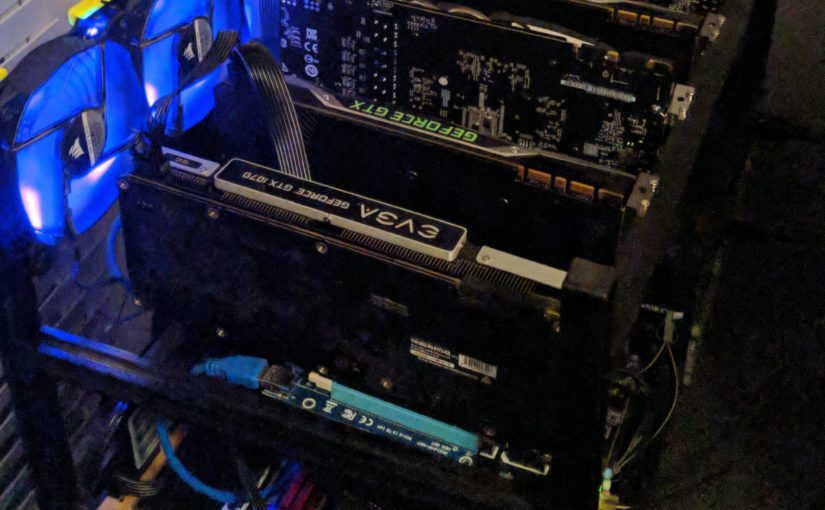
I started with a single GTX 1080. Over the course of a year, I picked up 5 additional GTX 1070s by watching Craigslist, Letgo, and r/minerswap — never paid more than $280 per card. Buying new cards kills your ROI timeline. Be patient.
More cards meant more supporting hardware. In addition to my existing CPU, memory, and 750W PSU, I added:
- 6 GPU Open Air Mining Frame
- ASUS B250 Mining Expert Motherboard
- 5× 120mm Case Fans
- Additional 750W PSU
- 6-Pack PCIe Risers
The OS
I started on Windows with Ethminer, but Windows loves to interrupt with updates at the worst possible times. I switched to HiveOS and never looked back.
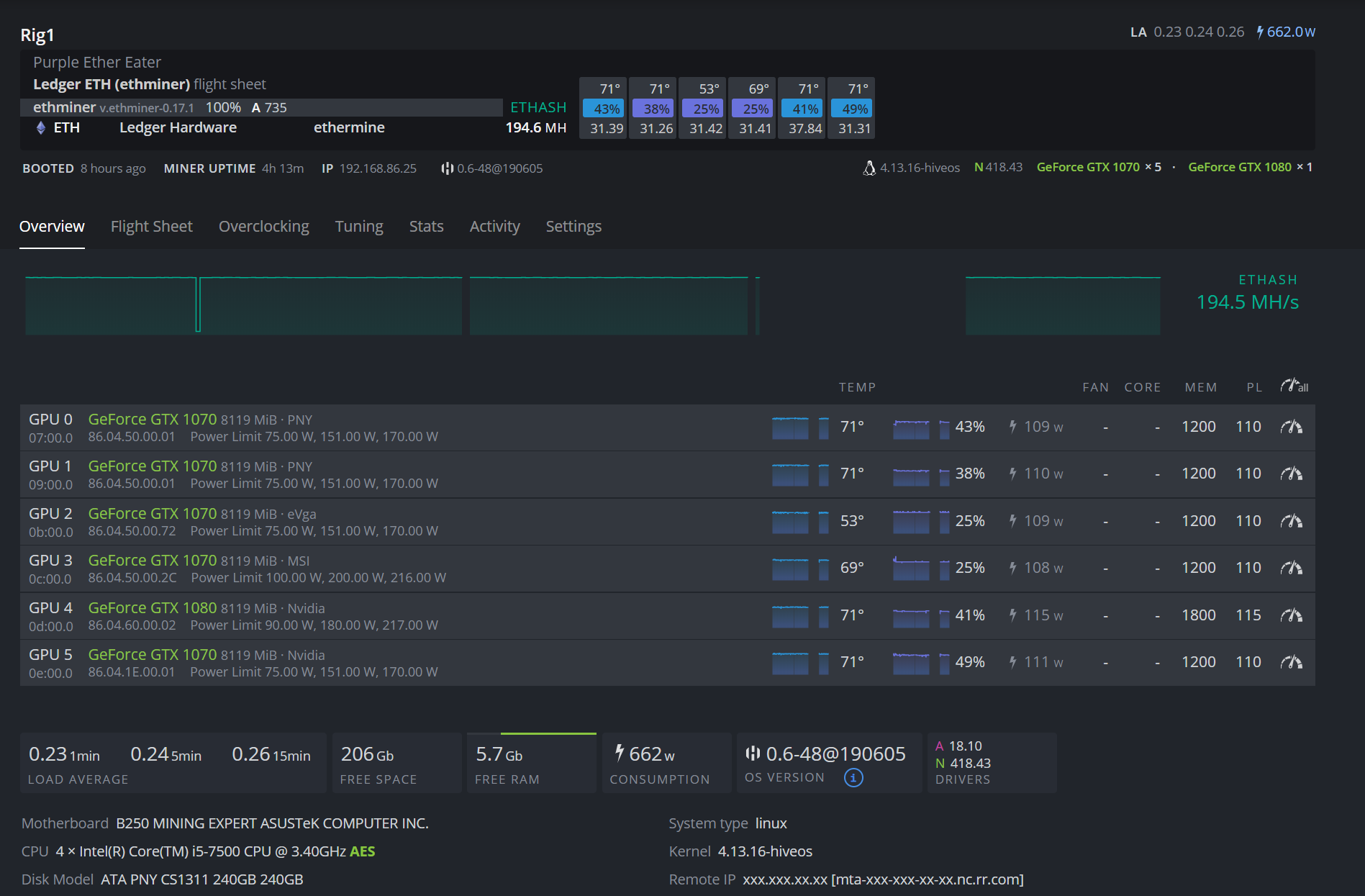 It’s a mining-focused Linux distro with a clean web dashboard showing all hardware stats at a glance.
For getting HiveOS set up properly, I recommend Seth’s HiveOS Tutorial.
Heat & Placement
Properly tuned GPUs still run hot. Put the rig somewhere well-ventilated and away from living spaces. On the upside: during winter, it makes a surprisingly effective space heater.
On Profitability
Two schools of thought:
- Sell as you go — liquidate a portion of earnings to offset hardware and electricity costs
- HODL — eat the costs upfront and bet on appreciation
I HODL, but keep an eye on the ETH/USD rate. Your call.